 An experiment with E. coli produced an intriguing evolutionary result. Forced to balance the competing demands of growth and chemotaxis, populations adapted until they reached what appeared to be an adaptive peak, where further improvement seemed constrained by a hard energetic trade-off. Then some escaped. They had not abolished the trade-off, but had evolved a way to express different behaviours at different times: grow when growth mattered, move when movement mattered. The result offers a useful way to think about modern AI. GPTs are extraordinarily effective products of optimisation within vast parameter spaces, yet increasingly their capabilities depend on systems built around them: retrieval, memory, tools, variable inference-time computation and orchestration. Sometimes a stubborn frontier really is a limit. Sometimes it reflects the dimensions in which we chose to describe the problem.
Writing
Essays, papers, notes, and references.
A place for longer pieces, formal work, and useful written records.
An experiment with E. coli produced an intriguing evolutionary result. Forced to balance the competing demands of growth and chemotaxis, populations adapted until they reached what appeared to be an adaptive peak, where further improvement seemed constrained by a hard energetic trade-off. Then some escaped. They had not abolished the trade-off, but had evolved a way to express different behaviours at different times: grow when growth mattered, move when movement mattered. The result offers a useful way to think about modern AI. GPTs are extraordinarily effective products of optimisation within vast parameter spaces, yet increasingly their capabilities depend on systems built around them: retrieval, memory, tools, variable inference-time computation and orchestration. Sometimes a stubborn frontier really is a limit. Sometimes it reflects the dimensions in which we chose to describe the problem.
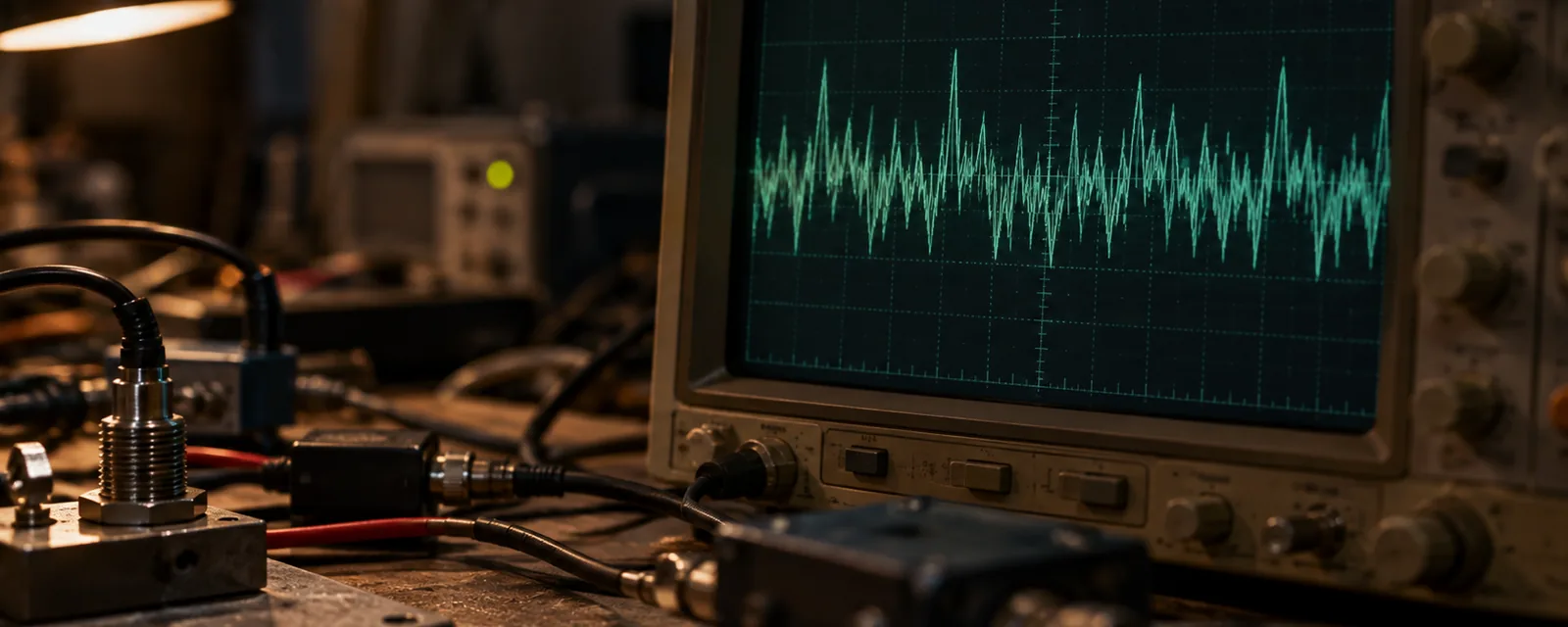 We routinely discard data as noise because it is not relevant to the measurement we intended to make. But irrelevance is not the same as absence of information. Physical events leave traces across sound, vibration, temperature, electrical current, radio emissions and other signals, often simultaneously. Cheap sensors can now capture many of these channels at once, while self-supervised machine learning can discover relationships between them without requiring every useful property to be labelled in advance. This article explores a shift from building sensors to answer predetermined questions towards collecting rich physical signals and learning what they can tell us. The central question is simple: what does the noise already know?
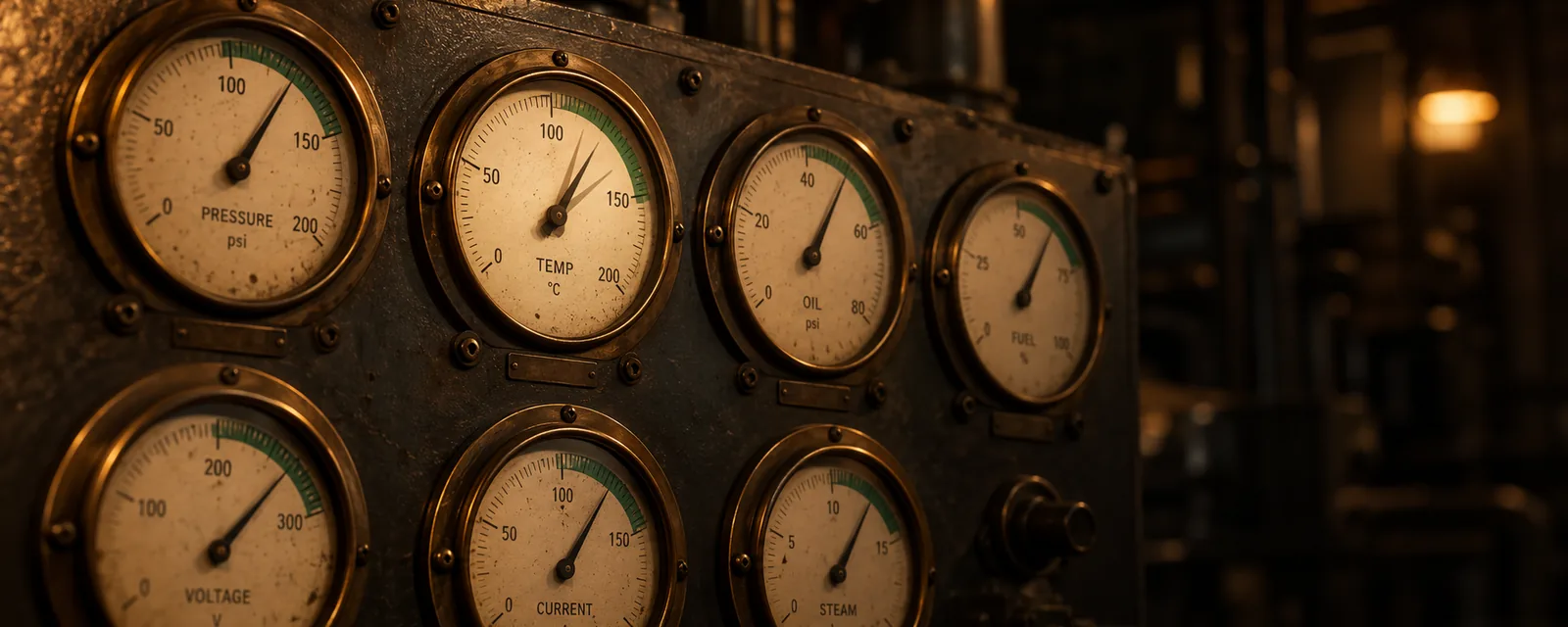 A pump can look steady on every gauge while its controller quietly works harder underneath, the surface reading and the real condition aren't the same thing, and most sensing systems can't tell the difference until it's too late. This essay makes the case for training a model to forecast a hidden representation of what a system will do next, rather than the raw numbers themselves, then teaching a separate stage to translate that representation back into something readable. It works through the architecture from first principles, encoder, predictor, decoder, the role of context from other sensors and written records, before following the idea into three places it might matter: catching faults before they become failures, spotting the moment physical and digital behaviour stop agreeing with each other, and finding ways to let a person follow a system's condition by ear instead of by staring at a dashboard.
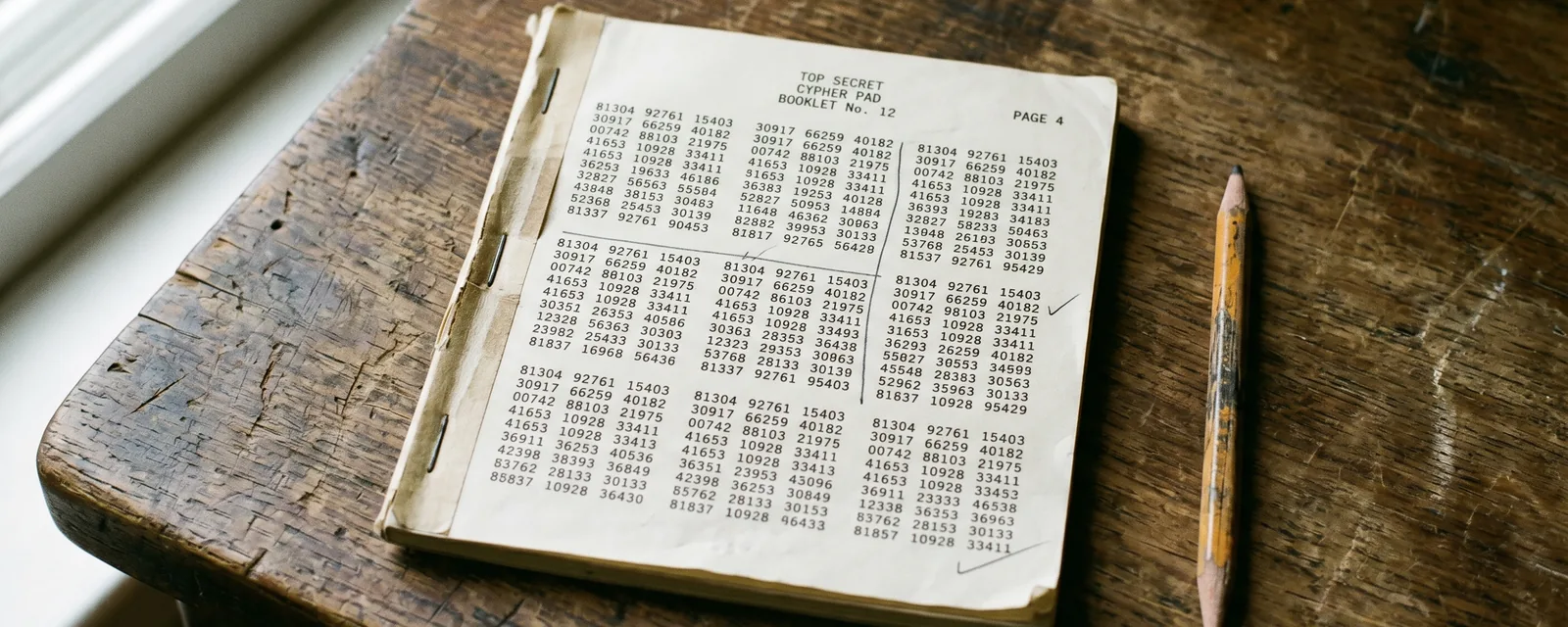 A one-time pad is unbreakable, provided it is true, and that second half, the quiet condition, is where the whole claim lives. A true pad is a very specific object: genuinely random, at least as long as the message, used once, kept secret, never copied, logged, inferred, generated from a seed, or reused by accident. The word “true” is doing all the work. This piece pulls that condition into the light, showing how a guarantee that is flawless in theory turns fragile the moment it meets real machines and real people. The proof is easy; the discipline is not. And the lesson generalises far beyond cryptography: a word carries a claim only when the thing it names actually satisfies the conditions that make the claim hold. Until then it is language with ambitions.